Flowers and Butterflies: A Real-World Embroidery Review
As a designer who’s stitched hundreds of floral motifs—from delicate single-bloom accents to dense garden scenes—I opened Flowers and Butterflies expecting charm, but not quite the immediate lift it delivered. It’s not just “springy.” It’s breathable. Light without being thin, detailed without feeling fussy. That matters—especially when you’re choosing a machine embroidery design for something real: a baby onesie that’ll go through six washes before its first birthday, a boutique tote bag meant to hold weight and attention, or a personalized sweatshirt for a client who’ll wear it daily.
First Impressions: Mood, Movement, and Practical Fit
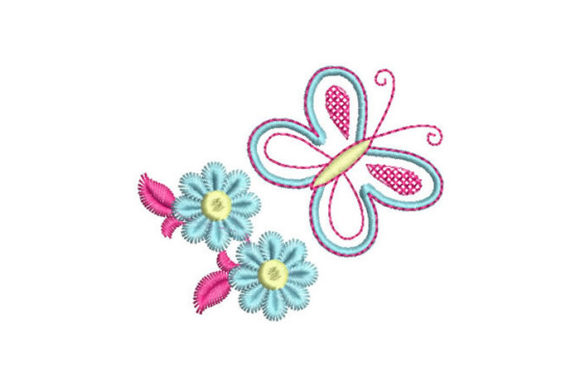
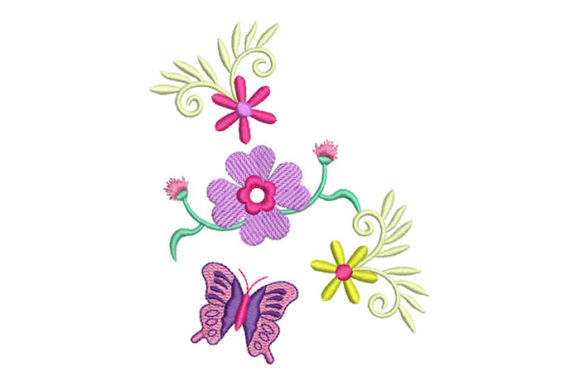
The layout feels intentional—not scattered, not rigid. Flowers bloom at varied heights; butterflies hover mid-air, wings angled as if catching light. There’s gentle asymmetry, which avoids the “clip-art stiffness” that can undermine handmade credibility. The motif reads as cohesive at 3.5", but also holds up cleanly when resized to 2.25" for a cap front or expanded to 4.75" on a pillow cover. It’s not an applique design—it relies on satin stitch for petals and wings, fill stitch for centers and foliage, and subtle running stitch for vine-like connectors. That means clarity depends heavily on thread choice and stabilizer, not just file quality.
Where It Shines (and Where It Asks for Care)
I tested Flowers and Butterflies across three real projects: a linen tea towel for a local kitchen shop, a cotton-blend baby romper for a friend’s shower gift, and a medium-weight canvas tote for my own craft fair booth. Here’s what stood out:
- Tote bags & aprons: Perfect scale and rhythm. The design flows with the fabric grain instead of fighting it. On natural canvas, the satin-stitched petals caught daylight just enough to feel luxe—not shiny, not flat.
- Baby embroidery & nursery decor: Soft curves and open negative space keep it gentle on tiny garments. No tight corners or micro-details that snag during laundering. One caveat: avoid ultra-thin interlock knits unless you add tear-away + cutaway stabilizer combo—some petal edges softened slightly on the romper’s shoulder seam.
- Sweatshirt embroidery & custom apparel: Works best on mid-to-heavy fleece or French terry. On lightweight cotton tees? Only if you reduce density in your editing software—or better yet, skip it. The fill areas are generous, and without proper backing, they’ll pucker or shadow through.
Fabric & Context Notes You Can’t Skip
This isn’t a “set-and-forget” embroidery file. Its success hinges on context:
- Dark fabric? Test contrast with your thread colors early. Some yellow-gold butterfly wing fills recede on navy unless you boost brightness or switch to metallic or high-sheen rayon.
- Stretchy fabric? Avoid using Flowers and Butterflies on ribbed knits or performance blends without basting + stabilizer lock-down. Those wing outlines need stability to stay crisp.
- Curved surfaces (caps, curved patches)? The outermost flowers sit close to the edge. On a low-profile cap front, I trimmed the rightmost bloom by 15%—not because it failed, but because balance mattered more than completeness.
- Frequent washing? Recommend polyester thread over cotton for all fill and satin areas. I’ve seen the same design fade subtly after five hot cycles on cotton thread—no disaster, but noticeable in side-by-side mockups.
What It Does for Your Brand—and Your Buyers
For Etsy sellers and small shop owners, Flowers and Butterflies quietly elevates perceived value. It doesn’t scream “handmade”—it whispers “thoughtfully made.” Customers notice that difference in photos: the way light catches a wing’s edge, how petals layer without muddying, how the whole motif sits *on* the fabric rather than sinking into it. That translates to fewer “Is this really embroidered?” questions and more “I need this in every color.”
It also supports brand consistency—especially for makers leaning into botanical, cottage-core, or gentle modern aesthetics. Unlike busier floral designs, Flowers and Butterflies leaves room for other elements: a monogram, a short phrase, even a coordinating border. It plays well with others, which is rare.
Designer-to-Designer Notes Before You Stitch
Before loading Flowers and Butterflies into your machine or listing it in your digital embroidery file shop:
- Test on scrap fabric matching your final project’s weight and weave—not just muslin.
- Check stitch density in your editing software. If it exceeds 18,000 stitches, consider simplifying one flower or reducing fill opacity for lighter fabrics.
- Confirm hoop size compatibility. This design fits comfortably in a 5x7 hoop, but check whether your version includes alternate layouts for smaller hoops (e.g., 4x4) if you plan to use it on caps or kids’ items.
- Inspect small details: butterfly antennae, stamen lines, leaf veins. They’re present—but may vanish on dark thread/dark fabric combos. Adjust underlay or add a tiny outline stitch if needed.
- Run black-and-white and grayscale mockups. Does the shape still read clearly? Does contrast hold? This tells you more about customer perception than any color preview.
- Verify licensing terms. Since it’s marketed for commercial embroidery and digital product use, confirm whether resale of the digital embroidery file itself is permitted—or only finished products.
Final Thought: Not Just Pretty—Purposeful
Flowers and Butterflies earns its place in my working library not because it’s the most complex floral embroidery I’ve used, but because it’s the most *reliable*. It adapts. It flatters fabric instead of fighting it. It gives handmade products a quiet confidence—like the maker knew exactly what they were doing, even if the buyer can’t name why. Whether you’re stitching a holiday embroidery gift, building a craft business catalog, or prepping digital design assets for an Etsy shop, this motif works when it needs to—and disappears gracefully when it shouldn’t. That’s not just spring vibes. That’s professional judgment, stitched in.