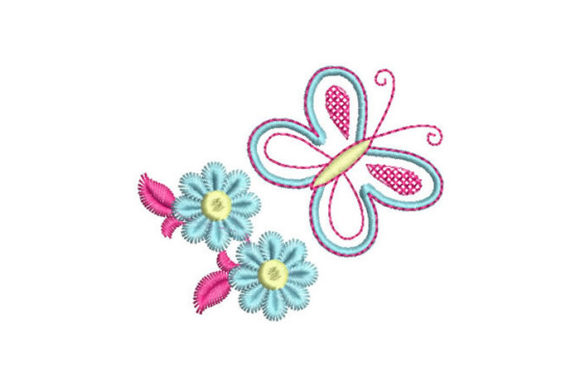
Butterfly with Flowers
A Craft Fair Designer’s First Look: Why This Design Stops Shoppers in Their Tracks
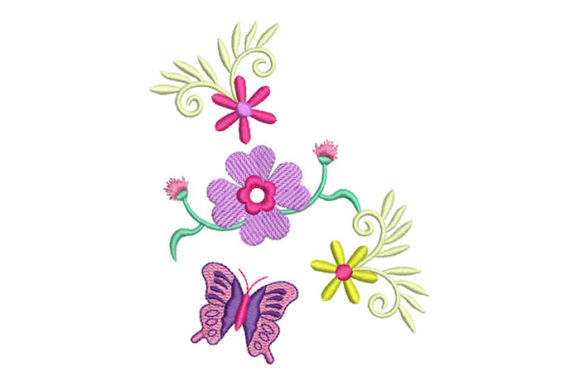
As an embroidery designer who’s prepped over 200 craft fair booths—and watched thousands of customers browse, pause, and reach for one item over another—I opened Butterfly with Flowers expecting charm. What I got was instant visual clarity: soft curves, balanced color zones, and a springtime energy that feels both joyful and intentional. It reads as cute but not childish, floral but not fussy, and decorative without sacrificing wearability. That’s rare. In a booth crowded with geometric prints and minimalist monograms, Butterfly with Flowers stands out because it delivers emotional warmth at a glance—exactly what draws eyes across a busy market aisle.
Where It Shines: Real Craft Fair Product Pairings
This machine embroidery design thrives where handmade charm meets everyday function. On a natural canvas tote bag? Perfect. The butterfly’s wings anchor the side panel beautifully—large enough to read from three feet away, yet delicate enough to feel artisanal. As apron embroidery on a linen or denim front pocket? Yes. It adds personality without overwhelming utility. For tea towel embroidery, place it centered near the top hem: the flowers frame the fold line, and the butterfly’s upward tilt creates gentle movement when the towel hangs.
It works brilliantly as an embroidered patch—clean edges, moderate stitch density, and no tiny interior details that snag or fray. Small fabric pouches (think lavender sachets or gift coin bags) benefit from its compact scale; scaled down to 3.5”, it retains legibility and charm. Pillow covers love it too—especially oatmeal, sage, or dusty rose linen—where the floral motif feels grounded, not saccharine. And for caps? Stick to structured, medium-crown cotton twill—not curved mesh—and position it cleanly above the visor seam. Avoid baseball caps with deep curvature unless you’ve tested hoop clearance and stabilizer hold.
What Makes It Sell—Beyond Just “Cute”
- Instant recognition: No decoding needed. Customers know it’s a butterfly + flowers before they even step up to your table.
- Booth cohesion: It bridges categories—works equally well on kitchen goods, apparel, and gifts—so you can build a unified display without repeating the same layout.
- Etsy seller advantage: Photographs cleanly against neutral backdrops. Looks premium in printable mockups, especially with soft shadow and fabric texture visible.
- Repeatable batch production: Clean outlines, minimal jump stitches, and consistent fill areas mean fewer thread breaks and faster hooping turnaround.
Careful-Use Notes Every Embroidery Business Owner Should Know
While Butterfly with Flowers is highly adaptable, it’s not universally forgiving. On textured towels—like heavy waffle-weave or looped terry—the fine stem lines and petal edges may blur if stabilizer isn’t layered correctly. Dark fabrics demand high-contrast thread colors; test white or buttercream thread on navy or charcoal to avoid muddiness. Tiny flower centers or wing vein details will vanish below 2.75”—so skip using it smaller than 3” on patches or keychain tags.
Curved surfaces (like rounded cap fronts or contoured pouch seams) require precise digitizing alignment—don’t assume the file auto-adjusts. And dense stitch areas (especially layered petals or overlapping wings) heat up quickly on high-speed machines; monitor tension and consider reducing speed by 15% for consistency.
Design Assets That Support Your Handmade Product Strategy
Before listing Butterfly with Flowers as a digital embroidery file or building finished products, treat it like a core design asset—not just decoration. Confirm commercial licensing applies to physical goods (not just digital resale). Test the embroidery file on scrap fabric matching your intended product: same weight, weave, and dye lot. Check thread contrast under both daylight and warm booth lighting. Review spacing between elements—if wings extend too close to the edge of a 4x4 hoop, you’ll need repositioning for small items like tea towels or pouches.
Use tear-away stabilizer for smooth cottons and linens; switch to cut-away for knits or stretchy totes. Always create at least one real mockup—not just a digital preview—before committing to 20+ units. Hold it beside your other bestsellers: does it elevate your brand voice? Does it feel cohesive next to your rustic herb labels or modern monogram sets? If yes, it strengthens your entire small shop product lineup.
Why This Floral Embroidery Design Builds Buyer Engagement
At craft fairs, attention is currency—and Butterfly with Flowers converts glances into conversations. Shoppers point to it, say “Oh, that’s sweet!” and often follow up with “Do you do custom colors?” That opens the door to upsells: matching thread kits, seasonal variations (add tiny Easter eggs or summer berries), or bundle offers (“Butterfly + Bees” patch set). Its handmade quality reads clearly—no pixelation, no stiff vector flatness—because the stitch density suggests care, not automation.
For Etsy sellers, it supports storytelling: “Hand-embroidered in my sunlit studio,” “Designed for slow living and spring mornings,” “Made to bring light to your everyday.” That resonance lifts perceived value far beyond the stitch count. And unlike trend-driven motifs that fade after two seasons, this design leans into timeless botanical joy—making it a reliable anchor in your commercial embroidery catalog year after year.
Final Designer Tip Before You Hoop Up
Don’t skip the real-world test. Stitch Butterfly with Flowers on your actual tote fabric, your most-used tea towel, and your go-to cap blank—even if it’s just one sample. Compare how it photographs versus how it feels in hand. Note where threads catch, where stabilizer shows, where color shifts on different backgrounds. That one test run saves hours of rework and builds confidence in every craft fair product you launch. Because great embroidery isn’t just stitched—it’s chosen, tested, trusted, and loved before it ever leaves your table.