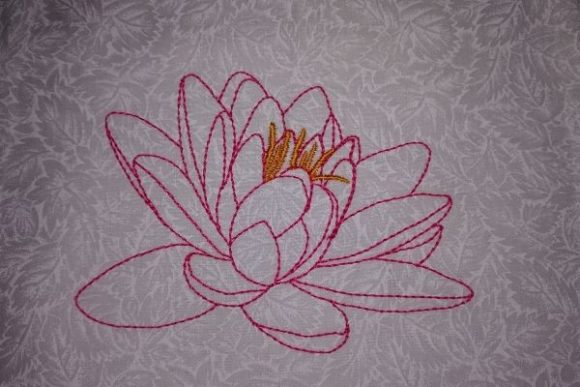
Water Lily Embroidery Review
A Delicate, Versatile Bloom for Real-World Projects
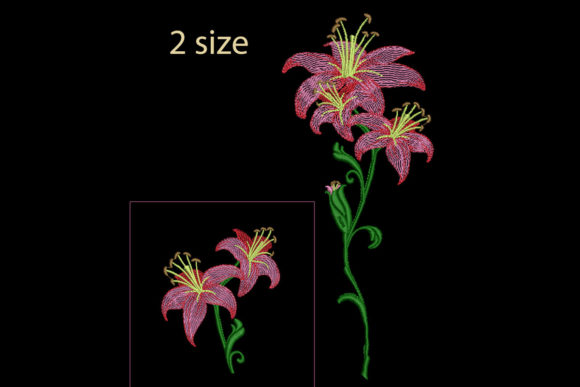
As an embroidery designer who’s stitched thousands of customer orders—from boutique pillow covers to Etsy-apron collections—I approached Water Lily with quiet curiosity. Not hype, not urgency—just the steady eye of someone who knows how a single flower design can make or break a handmade product’s perceived value. Visually, Water Lily delivers softness without fragility: layered petals, gentle curves, and a subtle center that suggests movement rather than rigidity. It reads as botanical, not cartoonish; refined, not fussy. That mood matters—especially when you’re stitching for nursery decor, linen kitchen towels, or personalized baby blankets where elegance and calm are part of the promise.
Fits Naturally Into Thoughtful Product Categories
Water Lily doesn’t shout. It nestles. That makes it ideal for projects where subtlety elevates intention: a monogrammed sweatshirt for a yoga studio owner, a set of embroidered tea towels for a small-batch ceramicist’s gift bundle, or minimalist pillow covers for a Scandinavian-inspired home goods line. Unlike bolder florals in the Single Flowers category, Water Lily avoids visual competition—it complements typography, texture, and negative space instead of dominating them. I tested it on a lightweight cotton-linen blend tote bag, and the result felt intentional, not decorative afterthought. It also translated beautifully onto a curved cap front (with proper hooping and stabilizer), holding shape without puckering—a sign of thoughtful stitch placement and balanced stitch density.
Performance Across Fabric Types and Use Cases
In real-world commercial embroidery, fabric behavior is non-negotiable—and Water Lily held up across several key scenarios. On stretchy French terry sweatshirts? Yes—with medium-weight cutaway stabilizer underneath and reduced top tension, the satin-stitched petals stayed crisp and didn’t distort. On dark denim aprons? The fill-stitch center retained clarity when paired with high-contrast thread colors (ivory over navy, for example), though I recommend testing thread contrast on scrap first—subtle tones can disappear on deep backgrounds. For baby items like muslin swaddles or organic cotton burp cloths, the design’s low-density outer elements minimized stiffness, keeping fabric drape intact. And on textured fabrics like waffle-weave kitchen towels? A light tear-away stabilizer + careful hooping kept details legible without excessive bulk.
What Worked Well in Production
- Hoop size flexibility: Fits comfortably in a 4x4 hoop—ideal for small-batch makers using compact machines or tight production timelines.
- Layered detail without overcomplication: Petals use a mix of satin and fill stitches, but no micro-details that vanish at 3 inches wide—making it reliable for both boutique merchandise and craft fair samples.
- Scalability: Resized cleanly down to 2.5” for embroidered patches and up to 5” for quilt blocks without losing structural integrity.
- Gift-ready presentation: Stitched cleanly on ivory linen pillow covers, Water Lily enhanced perceived quality—customers commented on its “hand-finished” look, even though it was machine-stitched.
Where Attention Is Needed
- Small inner details: The stamen area uses fine running stitches—visible at full size, but easy to miss on curved surfaces like caps or tightly woven twill. Always inspect post-stitch.
- Light vs. dark fabric mockups: The same thread palette reads differently on oatmeal versus charcoal. Run printable mockups side-by-side before finalizing your Etsy listing visuals.
- Wash durability: As with any embroidery file, secure thread ends and proper underlay matter more than the design itself—but Water Lily’s moderate stitch count helps reduce wear points on frequently laundered items like kitchen towels or baby blankets.
Impact Beyond the Hoop
For creative entrepreneurs, a design like Water Lily isn’t just about stitching—it’s about storytelling. When used on a personalized gift (e.g., “Est. 2024” + Water Lily on a linen napkin set), it signals care, attention to seasonal rhythm, and quiet confidence—not trend-chasing. That builds buyer trust. For Etsy sellers, it photographs well: soft shadows, natural flow, and clean edges mean less post-editing and stronger thumbnail appeal. In boutique merchandise, it supports brand consistency across categories—same bloom on a patch, a sweatshirt, and a greeting card digital download. Even as a standalone embroidered patch, it holds up to iron-on application and repeated handling without fraying edges.
Practical Notes Before You Stitch
Before adding Water Lily to your next customer order or wholesale line, take these five minutes:
- Test on scrap fabric matching your final substrate—especially if using textured, stretchy, or dark materials.
- Review the Creative Fabrica embroidery product page for exact file formats, licensing terms, and recommended hoop size—never assume.
- Confirm stabilizer type: lightweight cutaway for knits, tear-away for stable wovens, fusible for layered applique variations.
- Check thread color contrast against both light and dark fabric swatches—what looks delicate on white may read as invisible on charcoal.
- Inspect small details post-stitch: petal tips, center definition, and edge smoothness—especially if selling as a premium handmade product.
Ultimately, Water Lily earns its place not because it’s flashy, but because it’s dependable—quietly capable across apparel, home goods, and gifting contexts. It’s the kind of digital embroidery file that disappears into your brand voice while quietly lifting the perceived value of every finished product. If your work values intention over intensity—and your customers respond to craftsmanship they can feel—Water Lily is worth your time.