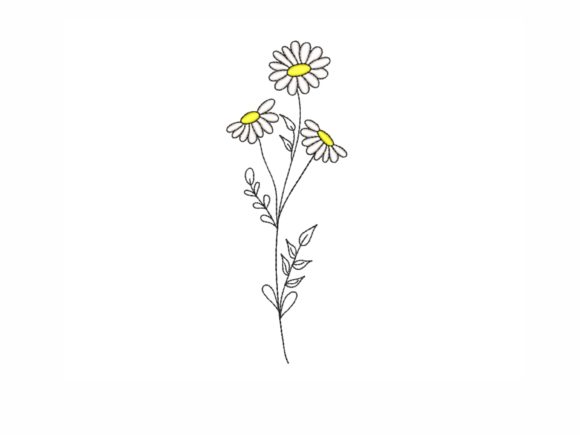
Smiley Flower: A Friendly, Functional Embroidery Design for Small Business Brands
First Impression: Playful Yet Polished — Perfect for Approachable Branding
As an embroidery designer who’s digitized and stitched thousands of designs for small businesses—from neighborhood bakeries to indie florists—I immediately recognize the quiet power of Smiley Flower. Its name alone signals warmth and positivity, and the description—“Add a happy touch to your creations with this beautiful flower embroidery”—tells me it’s intentionally designed to uplift, not overwhelm. It doesn’t try to be ultra-realistic or overly intricate. Instead, it leans into friendly simplicity: rounded petals, soft curves, and a subtle smile motif built into the bloom’s center. That makes Smiley Flower feel handmade but professional—ideal for brands that want to balance charm with credibility.
Real-World Business Use: Where This Single Flower Truly Blooms
Smiley Flower shines brightest where personality meets practicality. For a local café, it works beautifully as a 2-inch embroidered patch sewn onto aprons or staff tote bags—friendly enough to spark customer smiles, refined enough to reflect quality service. Boutique owners use it as a chest accent on linen-blend work shirts; pet brands embroider it onto bandanas or grooming towels; florists stitch it beside their logo on reusable gift wraps. As a machine embroidery design, its clean lines translate well across fabric types—cotton canvas, twill, denim, even lightweight canvas blends—making it versatile for custom apparel, apron embroidery, and cap embroidery.
In my studio, I’ve used Smiley Flower as a standalone brand marker for Etsy sellers launching handmade product lines. It adds visual consistency without competing with typography—great for labels on ceramic mugs, soap packaging, or candle sleeves. Because it belongs to the Single Flowers category, it avoids clutter while still carrying emotional weight. Unlike dense floral bouquets, Smiley Flower leaves breathing room in layouts—critical when pairing with logos or taglines in printable mockups or digital storefronts.
Where to Use It Thoughtfully: Design Discipline Matters
Even joyful designs need strategic placement. Smiley Flower performs best at 1.5–3 inches wide. Below 1.25 inches, subtle details (like the smile curve or petal separation) risk blending together—especially on textured fabric or dark uniforms. Avoid placing it on highly curved surfaces like cap fronts unless you confirm the embroidery file includes underlay adjustments for stretch and distortion. Also, if your stitch density is high or thread colors lack contrast (e.g., light yellow on cream fabric), the cheerful expression may mute. Always test Smiley Flower in black-and-white first—this reveals clarity issues no color preview catches.
Brand Identity Impact: More Than Just a Pretty Stitch
For small business merch, every stitch contributes to perception. Smiley Flower strengthens brand identity by reinforcing approachability and care—traits customers associate with trusted local businesses. When stitched on staff uniforms, it subtly signals friendliness before a word is spoken. On tote bags handed to customers, it becomes a walking brand ambassador: warm, memorable, and distinctly human. Unlike generic clipart-style blooms, Smiley Flower feels intentional—not decorative filler, but part of the story. That builds recognition across touchpoints: event merch, product packaging accents, and even handwritten thank-you notes paired with embroidered patches.
Crucially, it supports the “handmade product” aesthetic without looking amateurish. Its balanced proportions and smooth satin-stitched petals communicate craftsmanship—raising perceived product value. For crafters and digital embroidery file buyers, that means fewer client revisions and faster approvals. For merch creators, it means cohesive assets that scale across physical and digital channels without losing warmth.
Practical Designer Notes Before You Stitch
Before adding Smiley Flower to your production workflow, run these checks:
- Test it at your target size—especially for embroidered patch applications. Does the smile remain legible at 1.75 inches?
- Review thread color contrast on your actual fabric swatches. Bright threads pop on darks; matte tones soften on lights.
- Inspect spacing and density—tight petal edges shouldn’t bleed or tunnel, especially on lightweight materials.
- Confirm hoop size compatibility with your commercial embroidery machines. If unstated, assume standard 4x4 or 5x7 hoops—but verify.
- Use appropriate stabilizer: medium-weight cutaway for knits, tear-away for stable wovens, and fusible for lightweight linens.
- Always stitch a physical sample before bulk production—even on scrap fabric. Real-world tension, needle heat, and fabric movement change outcomes.
- Create a client-facing mockup showing Smiley Flower alongside existing design assets—logo, fonts, brand colors—to ensure visual harmony.
- Double-check commercial licensing. Since this is a digital embroidery file intended for commercial embroidery, confirm usage rights cover resale, branded merchandise, and small business distribution.
Final Thought: A Small Design With Big Brand Potential
Smiley Flower isn’t just another Embroidery file—it’s a thoughtful tool for small business storytelling. In a market saturated with generic icons and overdesigned logos, its sincerity stands out. Whether you’re an embroidery shop digitizing for clients, an Etsy seller building a signature look, or a creative studio refreshing your merch line, Smiley Flower delivers consistent charm, technical reliability, and brand-aligned warmth. It reminds us that sometimes, the most effective branding isn’t loud—it’s kind, clear, and quietly unforgettable.