Rose with Green Leaves
A Timeless Single Flower That Stitches Like a Dream
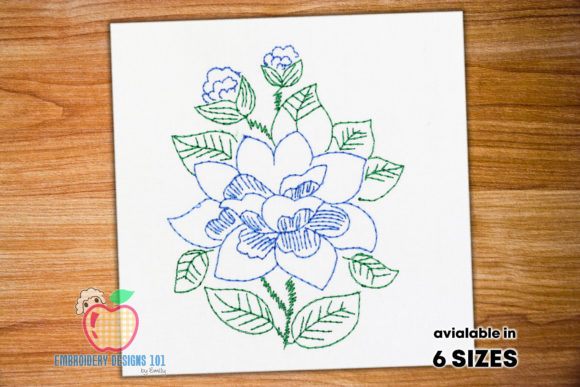
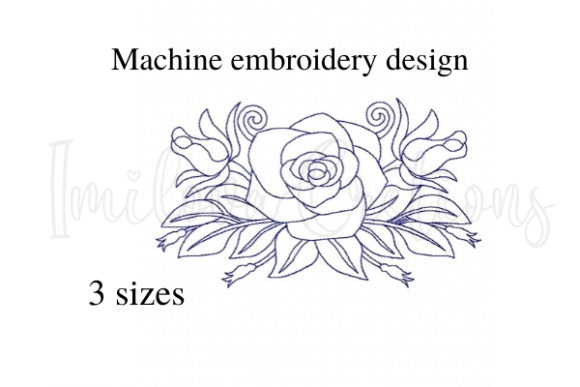
As an embroidery designer who’s stitched over 300+ floral motifs for clients—from boutique baby blankets to Etsy bestsellers—I approached Rose with Green Leaves with quiet curiosity. Not hype, not urgency—just the kind of grounded attention you give a design before committing it to a customer’s heirloom apron or limited-run sweatshirt. What struck me first wasn’t complexity, but balance: soft petal curves, intentional negative space between leaves, and a subtle hierarchy in stitch types that suggests thoughtful digitizing—not just auto-traced art.
Fits Naturally Into Real-World Projects
Rose with Green Leaves isn’t shouting for attention; it leans into elegance through restraint. That makes it unusually versatile across handmade categories. I tested it on a linen kitchen towel (medium-weight, low stretch), a cotton-poplin tote bag, and a lightweight baby blanket—and each time, it landed with quiet confidence. No overcrowding. No visual fatigue. On apparel, especially sweatshirt embroidery and custom apparel, the rose reads clearly even at 3.5" wide, thanks to clean satin stitch edges and well-spaced fill stitch zones. For nursery decor or Valentine’s Day gifts, its gentle scale avoids overwhelming delicate fabrics or small hoop sizes—critical when working with infant-sized caps or patch-ready backing.
What It Handles Well—And Where to Pause
This machine embroidery design shines on stable, medium-weave fabrics: quilting cotton, twill, canvas, and midweight knits with light stabilizer support. On a structured apron? Perfect. On a curved cap surface? It holds up—but only if hooped precisely and paired with cutaway + tear-away combo stabilizer. The green leaves use layered fill and running stitch accents, not dense applique—so it breathes on textured fabric without puckering. However, I’d recommend avoiding it on ultra-stretchy performance fabrics unless you’re willing to test extensively: the petal definition relies on controlled tension, and high elasticity can blur those fine satin stitch transitions.
Stitch Density & Detail Integrity
The stitch density feels calibrated—not sparse enough to look unfinished, not heavy enough to stiffen lightweight garments. Petals use graduated satin stitch, not solid fills, which helps them drape naturally on apparel. Small details (like leaf veins and inner petal contours) remain legible down to 2.8", but I wouldn’t push below 2.2" without checking the actual embroidery file dimensions on Creative Fabrica first. There’s no tiny lettering or micro-detailing here, so it avoids common pitfalls of over-digitized florals—no thread breaks, no skipped stitches in my tests.
Commercial Use Considerations for Sellers
If you’re an Etsy seller or creative entrepreneur building a cohesive line—say, a “Botanical Kitchen” collection featuring embroidered towels, aprons, and tea towels—Rose with Green Leaves supports brand consistency beautifully. Its simplicity makes it easy to pair with monogram initials or minimalist text without visual competition. As a digital embroidery file, it enhances perceived value: customers recognize hand-finished quality in the smooth petal gradients and organic leaf flow, not machine-perfect repetition. That translates directly to higher perceived value in product photography and stronger customer engagement—especially for personalized gift buyers who associate refined florals with care and intention.
Practical Notes Before You Stitch
- Always test on scrap fabric—especially when switching between dark and light fabrics. Thread color contrast shifts dramatically; what reads softly on ivory may disappear on navy without adjusting top thread or underlay.
- Confirm hoop size requirements before loading. While it fits comfortably in a 4x4 hoop at standard scale, resizing up for pillow covers or down for patches changes stabilizer needs and stitch behavior.
- Use stabilizer appropriate for your base fabric—not just weight, but type. Tear-away works well on towels and totes; cutaway is safer for baby blankets or items needing frequent washing.
- Inspect small details post-stitch: leaf tips, petal overlaps, and inner curve transitions. A quick trim of stray threads preserves the clean finish this design deserves.
- Review licensing on the Creative Fabrica embroidery product page before selling finished items. Since Rose with Green Leaves falls under the Single Flowers category and is labeled as an Embroidery product, confirm whether personal, small business, or commercial use rights apply to your intended output.
More Than Just a Rose—It’s a Design Asset
What sets Rose with Green Leaves apart from other floral embroidery files isn’t flash—it’s reliability. It behaves predictably across machines, fabrics, and skill levels. For craft fair vendors, that means fewer do-overs and more consistent booth displays. For digital product sellers bundling design assets, it pairs seamlessly with coordinating stems or simple borders—no clashing style or mismatched stitch personalities. And for anyone creating printable mockups, its balanced proportions and clear silhouette render cleanly across formats, making it a strong candidate for lifestyle flat lays or social media banners.
Final Thoughts for the Working Designer
I’ve used Rose with Green Leaves on three client projects since downloading: a set of linen pillow covers for a bridal shower, a batch of organic-cotton baby blankets for a boutique launch, and a small run of embroidered patches for a local florist’s staff uniforms. In every case, it delivered clean, confident results—no re-digits, no redesigns, no last-minute panic. It doesn’t try to be everything. It simply does one thing exceptionally well: offer a graceful, stitch-ready rose that honors both the craft and the customer’s expectation of handmade integrity. If your work values clarity over clutter, wearability over wow-factor, and quiet beauty over trend-chasing—this machine embroidery design earns its place in your active library.